How Freight Configuration Impacts Warehouse Efficiency, Labor Costs, and Supply Chain Performance
In today’s fast-paced logistics industry, every minute at the loading dock counts. Warehouse managers, transportation carriers, distribution centers, and third-party logistics (3PL) providers understand that how freight arrives can significantly impact your operational efficiency, labor requirements, turnaround times, and, most important, profitability.
One important distinction is whether shipments arrive palletized or floor-loaded. While both methods offer advantages, each presents unique challenges when unloading freight. Understanding these differences can help logistics decision-makers streamline operations, control costs, and minimize costly disruptions.
At Express Freight Handlers, we understand the complexities of freight handling. Unloading more than one million trailers and containers annually, our experienced teams help businesses nationwide manage demanding freight volumes while maintaining their operational efficiency.
What Is the Difference Between Palletized and Floor-Loaded Freight?
Just to ensure we are all on the same page, for the purposes of this blog, we’ll use the following definition:
Palletized freight consists of goods stacked and secured on pallets, while floor-loaded freight is packed directly onto a trailer or shipping container floor without pallets. The primary difference is how shipments are handled, unloaded, sorted, and moved into warehouse storage.
For businesses evaluating freight handling strategies, the optimal approach depends on shipment characteristics, available labor, equipment, storage capacity, and delivery schedules.
Palletized Freight: Speed, Organization, and Accessibility
Palletized shipments are commonly used throughout retail distribution networks, food and beverage distribution facilities, warehouses, and other high-volume logistics operations.
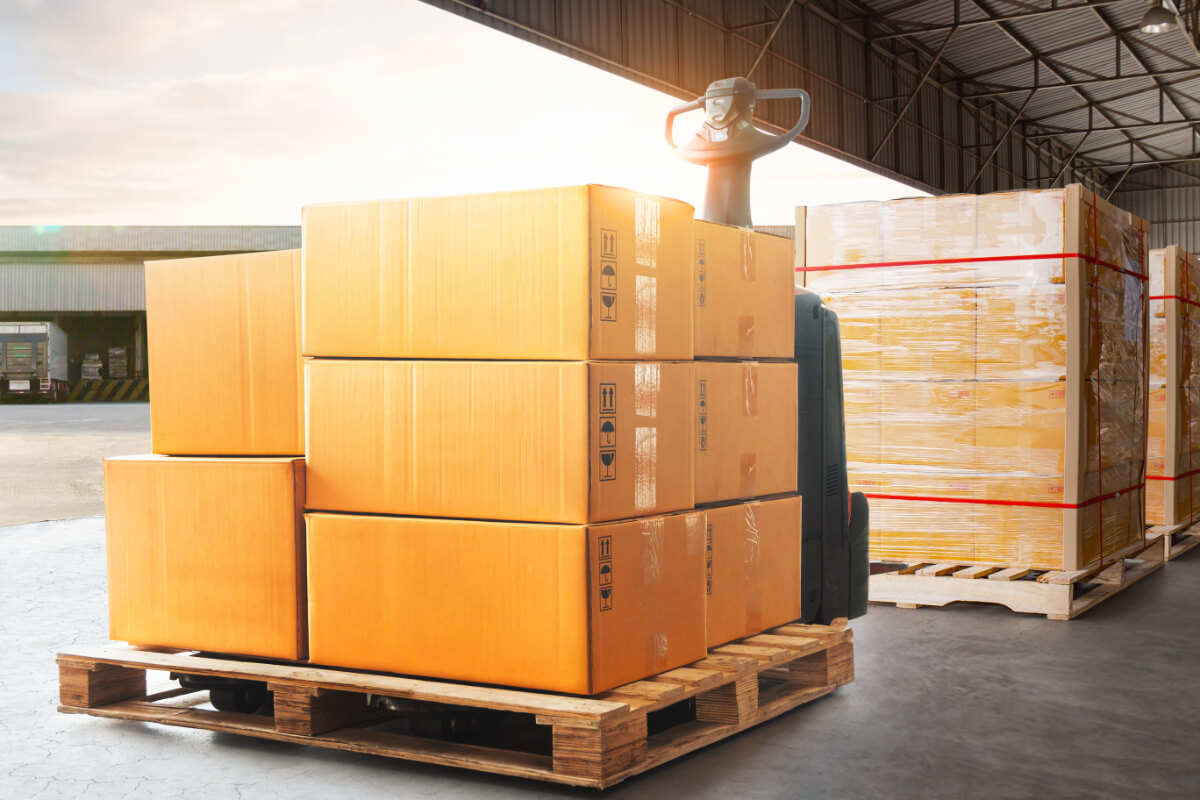
Goods are stacked on wooden, plastic, or other suitable pallets, typically secured with stretch wrap or strapping. Forklifts and pallet jacks allow workers to move multiple cartons simultaneously.
Advantages of Palletized Freight Include:
- Faster unloading: Properly configured palletized shipments can be removed efficiently using material handling equipment.
- Reduced manual handling: Mechanized movement minimizes repetitive lifting and physical strain.
- Improved inventory management: Organized pallets simplify product identification, scanning, and storage.
- Lower handling-related damage risk: Securely stacked shipments generally require fewer individual handling steps.
- Predictable dock scheduling: Standardized loads can help warehouse managers estimate unloading times more accurately.
However, palletized freight also has limitations. Pallets occupy valuable trailer space, add weight, and may increase transportation and packaging expenses. Improper stacking can also create safety hazards or result in damaged merchandise.
For many operations, the benefits of faster unloading freight and streamlined inventory movement outweigh these considerations.
Floor-Loaded Freight: Maximizing Trailer Capacity While Managing Labor Demands
Floor-loaded freight is packed directly into a trailer or container, typically as individual cartons, cases, or other non-palletized units.
This configuration is common in imported merchandise, eCommerce fulfillment, retail replenishment, and high-volume consumer goods distribution.
By eliminating pallets, shippers can often maximize available cargo space, accommodate irregularly shaped products, and reduce pallet-related expenses.
Advantages and Challenges of Floor-Loaded Freight
Floor loading offers several potential benefits:
- Greater utilization of trailer and container capacity.
- Reduced pallet procurement and transportation expenses.
- Flexible configurations for mixed-size cartons and merchandise.
- Potential shipping efficiencies for high-volume, lightweight products.
However, these advantages introduce additional demands at the receiving dock.
Unlike palletized shipments, floor-loaded freight frequently requires workers to unload cartons individually, sort merchandise, build pallets, and prepare products for warehouse storage or onward distribution.
The result? Unloading freight can become considerably more labor-intensive and time-consuming.
Without sufficient personnel, appropriate equipment, and an organized unloading process, facilities may experience dock congestion, extended carrier wait times, employee fatigue, and disruptions to receiving schedules.
For distribution centers processing multiple inbound trailers daily, these delays can affect operations throughout the supply chain.
It does not have to be that way. By partnering with Express Freight Handlers’ highly-experienced teams to perform lumper, and upon request, additional warehouse tasks, our professionalism will translate directly into savings for you.
Palletized vs. Floor-Loaded Freight: Which Is More Cost-Effective?
The most cost-effective freight configuration is not necessarily the one with the lowest transportation expense. Businesses must evaluate total handling costs, including labor, equipment, trailer utilization, unloading time, and potential delays.
| Operational Factor | Palletized Freight | Floor-Loaded Freight |
|---|---|---|
| Unloading speed | Generally faster with proper equipment | Typically slower and more labor-intensive |
| Labor requirements | Lower manual handling requirements | Higher manual handling requirements |
| Trailer space utilization | Reduced by pallet dimensions | Potentially greater cargo utilization |
| Equipment needs | Forklifts and pallet jacks | Conveyors, pallet jacks, and manual handling equipment |
| Sorting requirements | Often reduced for organized shipments | Often requires individual carton sorting |
| Cost considerations | Pallet expenses and equipment | Labor, unloading time, and pallet-building expenses |
For warehouse managers and logistics executives, the decision should consider the entire inbound freight process rather than transportation costs alone.
For example, a floor-loaded shipment may reduce freight costs through improved container utilization. However, additional unloading labor, extended dock occupancy, and delayed inventory processing can offset those savings.
Conversely, palletized freight may cost more to transport but allow faster receiving and more predictable warehouse operations.
The key is evaluating total landed and handling costs, not simply the cost of moving the shipment.
Why Professional Freight Unloading Services Matter
Whether a shipment arrives palletized or floor-loaded, efficient unloading depends on experienced personnel, effective scheduling, and disciplined operational procedures.
For warehouses, retail distribution networks, cold storage facilities, and food and beverage distributors, fluctuations in freight volume can make maintaining an appropriately sized in-house workforce challenging.
Express Freight Handlers’ professional freight handling services provide additional labor capacity to help facilities accommodate varying shipment configurations and receiving demands. We are on site when you need us and gone when you don’t.
How Professional Unloading Teams Support Warehouse Operations
Experienced freight handling teams can help businesses:
- Improve dock productivity: Facilitate the efficient movement of inbound shipments and reduce avoidable bottlenecks.
- Manage variable freight volumes: Scale labor resources to accommodate seasonal peaks and unexpected delivery surges.
- Support carrier turnaround: Reduce unnecessary unloading delays that may contribute to detention charges.
- Handle complex shipments: Address the additional sorting, palletizing, and handling requirements associated with floor-loaded merchandise.
- Maintain workflow continuity: Allow warehouse personnel to concentrate on inventory management, order fulfillment, and other essential responsibilities.
- Control labor expenditures: Reduce dependence on maintaining excess permanent staffing capacity during periods of fluctuating demand.
For motor carriers, shippers, and 3PL providers, reliable unloading support can also promote more predictable freight movement and stronger coordination among supply chain partners. Again, this translates into lower overhead costs and an increased ROI.
How Express Freight Handlers Helps Businesses Optimize Unloading Operations
With more than one million trailers and containers unloaded annually, Express Freight Handlers brings substantial industry experience to the demanding world of freight handling.
Our professional teams understand that every shipment presents different operational requirements. From palletized merchandise requiring efficient equipment-assisted handling to floor-loaded containers demanding coordinated manual labor, our focus is on helping our clients maintain productivity and minimize costly interruptions.
We work with businesses across the logistics and distribution sectors, supporting operations where unloading efficiency directly affects receiving capacity, transportation schedules, and customer satisfaction.
For warehouse managers, transportation carriers, and logistics stakeholders, partnering with Express Freight Handlers as your experienced freight handling provider offers a practical way to address labor demands without compromising operational priorities.
Frequently Asked Questions About Unloading Freight
Is palletized freight faster to unload than floor-loaded freight?
Generally, yes. Palletized freight can be moved using forklifts or pallet jacks, allowing multiple cartons to be handled simultaneously. Floor-loaded shipments typically require more manual handling, sorting, and pallet preparation.
Why do shippers use floor-loaded containers?
Floor loading can maximize usable trailer or container space by eliminating pallets. This may reduce transportation costs per unit, particularly for high-volume shipments of cartons or consumer merchandise. While efficient for transport, this container mode requires skilled handling at the loading dock and warehouse.
What factors affect freight unloading costs?
Primary considerations include shipment configuration, freight volume, carton weight, labor requirements, material handling equipment, sorting needs, and unloading time. Facility conditions and delivery scheduling can also influence costs.
Can professional freight handlers unload both palletized and floor-loaded shipments?
Yes. Express Freight Handlers’ qualified freight handling teams can support both configurations, using appropriate personnel, equipment, and unloading procedures based on shipment characteristics and facility requirements.
When should a warehouse outsource freight unloading?
Outsourcing is most beneficial when facilities experience inconsistent inbound volumes, labor shortages, recurring dock congestion, extended carrier wait times, or unusually labor-intensive floor-loaded shipments.
Keep Your Freight Moving with Express Freight Handlers
Whether your facility handles palletized shipments, floor-loaded containers, or a combination of both, efficient unloading is essential to maintaining a productive, cost-conscious supply chain.
Express Freight Handlers delivers the experience, workforce support, and operational expertise businesses need to keep freight moving.
Don’t allow labor shortages, dock congestion, or complex shipments to compromise your distribution network’s performance.
Contact Express Freight Handlers today to learn how our professional freight handling services can help streamline your unloading operations, improve turnaround times, and support your business’s bottom line.